
The False Serial-Killer Persona
The A.B.C. MurdersThis thread follows the construction of a public maniac whose apparent rules both attract police attention and shield Franklin Clarke’s private crime.
increasing Bearing strength in each event
 decreasing
Bearing strength in each eventdecreasingA Killer Signs A B C
A Name Invented
An imposing signature
The letters signed A B C give an unknown person a memorable identity. The signature offers the public a character to fear before anyone knows the killer.
Attention directed outward
The apparent challenge to Poirot turns investigation into a contest. It conceals the more ordinary question of who stands to benefit from a death.
The Railway Prop

A Pattern Made Visible
A guide beside Alice
The first railway guide makes the alphabetical idea tangible. Its placement encourages investigators to read meaning into the object and the location.
A portable symbol
The guide is easily repeated at later scenes, allowing different murders to look like one author’s work. Its simplicity helps the fiction spread.
Public Panic Grows
The Nation Watches
Headlines define the case
Newspapers popularize the ABC story, and citizens begin reporting suspicious strangers and guide purchases. The imagined killer becomes more prominent than the individual victims.
Clarke gains cover
The campaign diverts scrutiny from family motives and creates pressure to solve the series as a single mystery. Publicity, intended to expose the killer, helps protect him.
The Pattern Breaks
A Bad Alphabetical Fit
Earlsfield is killed
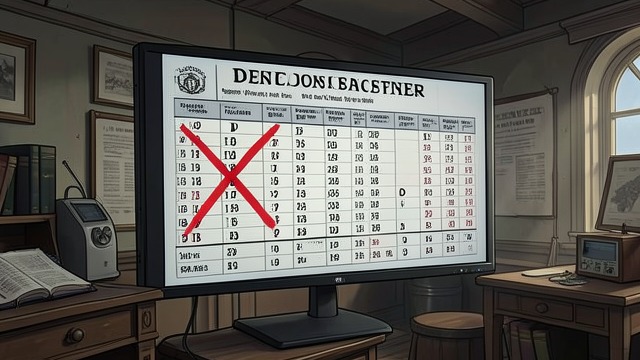
The Doncaster victim’s name does not begin with D. Investigators explain the mismatch as a mistaken target, preserving the serial narrative for a time.
The fiction strains
The killing’s apparent error reveals that the alphabet is a flexible cover. A constructed system can explain almost anything until someone questions why it exists.
The Persona Collapses
A Rational Plot Beneath Madness
Poirot rereads the letters
Poirot sees that the notes are a sane person’s imitation of a lunatic. Their purpose is to connect separate crimes and direct attention away from Clarke.
The real motive returns
The serial identity dissolves, leaving a murder for inheritance and a victim selected for a practical reason. The disguise fails when the case is read as a human plot.
June 1935
June 21, 1935
After the Bexhill and Churston murders
September 11, 1935
Near the ending
